
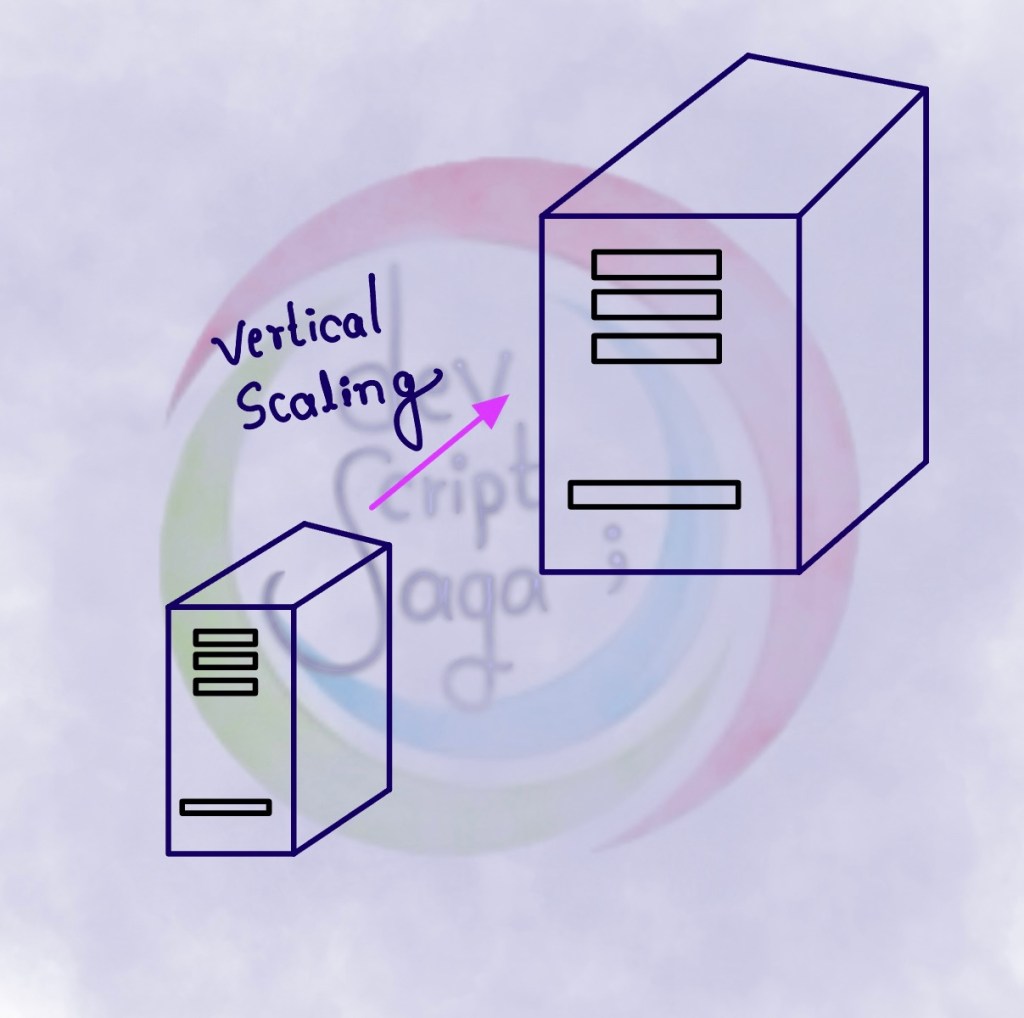
Vertical scaling means the process of adding more power (CPU, RAM, etc.). It is also referred to as “Scale-up”.
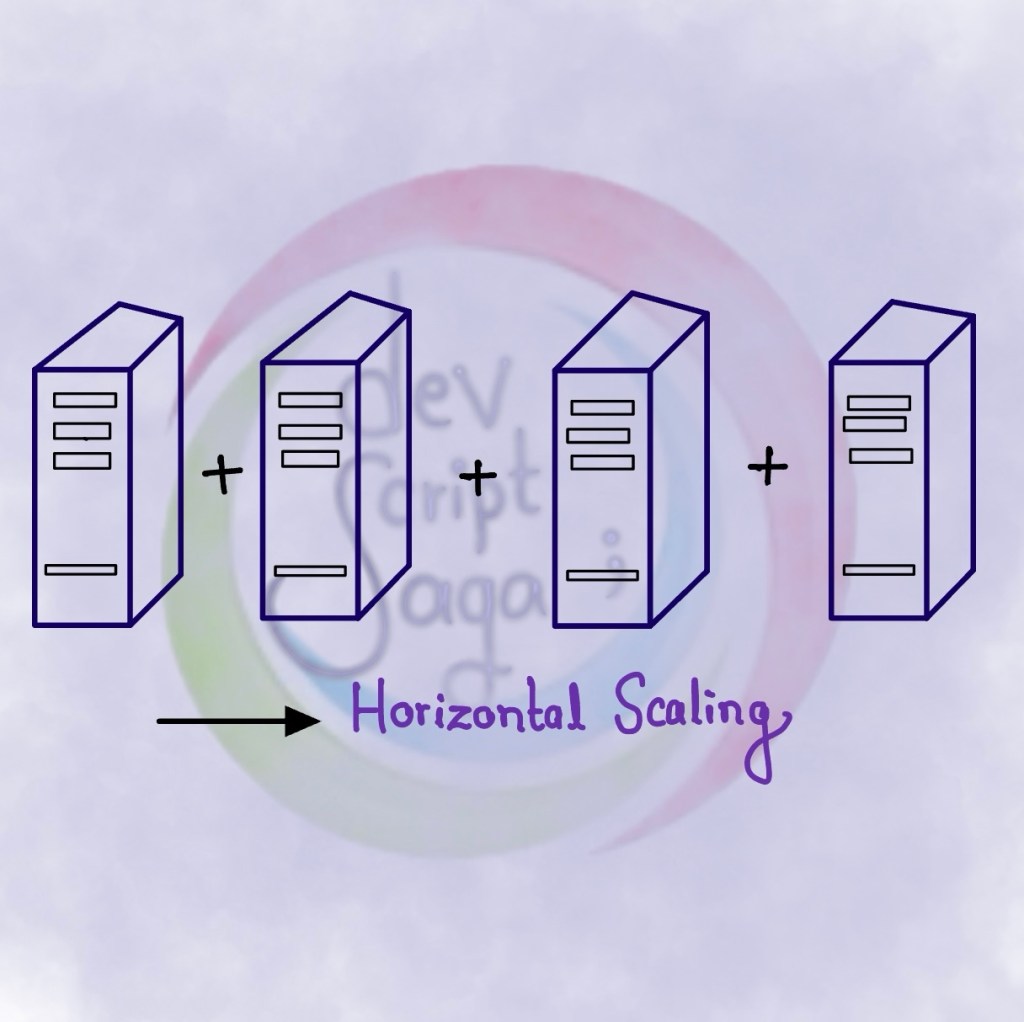
Horizontal scaling allows you to scale by adding more servers to your pool of resources referred to as “Scale-Out”.
When the traffic is low, vertical scaling is a great option. Simplicity is the main advantage but many limitations come with it:
- It is impossible to add unlimited CPU and memory to a single server.
- If one server goes down, the system goes down with it completely. Vertical scaling does not have failover and redundancy.
Due to these limitations, horizontal scaling is more desirable.
in Horizontal scaling, even if we add more servers and many users access web server simultaneously and reaches to only one server, it will hit server’s limit and in this case it will experience slower response or fail to connect with server. And so Load Balancer comes into picture. It evenly distributes incoming traffic among web servers. Learn more about Load Balancer in the next blog.

 DevScript Saga
Leave a comment